- Requirements
- →
- CAD
- →
- Review
- →
- Fabricate
- →
- Install
- Scope
- Structural tube work on customer vehicles
- Tools
- SolidWorks, CNC, MIG/TIG, plasma
- Basis
- Freelance, self-directed
- Since
- 2022
How the Work Comes In
Customers rarely arrive with a drawing. They arrive with a car, a problem, and a budget. The first job is turning that into requirements — what the part has to do, what it has to fit, what load it sees, and what it can cost — before any modeling starts.
Both projects below are structural tube work on somebody else's vehicle, which raises the stakes in a specific way: the part has to fit a chassis I did not design, and if it is wrong, it is wrong on a car the owner needs back.
They are also opposites, which is why they are both here. One was improvised against a two-day deadline. The other was planned to a rulebook before a single tube was bent. Different constraints, different methods, same requirement that the finished part actually works.
Tubular Doors — Jeep Wrangler
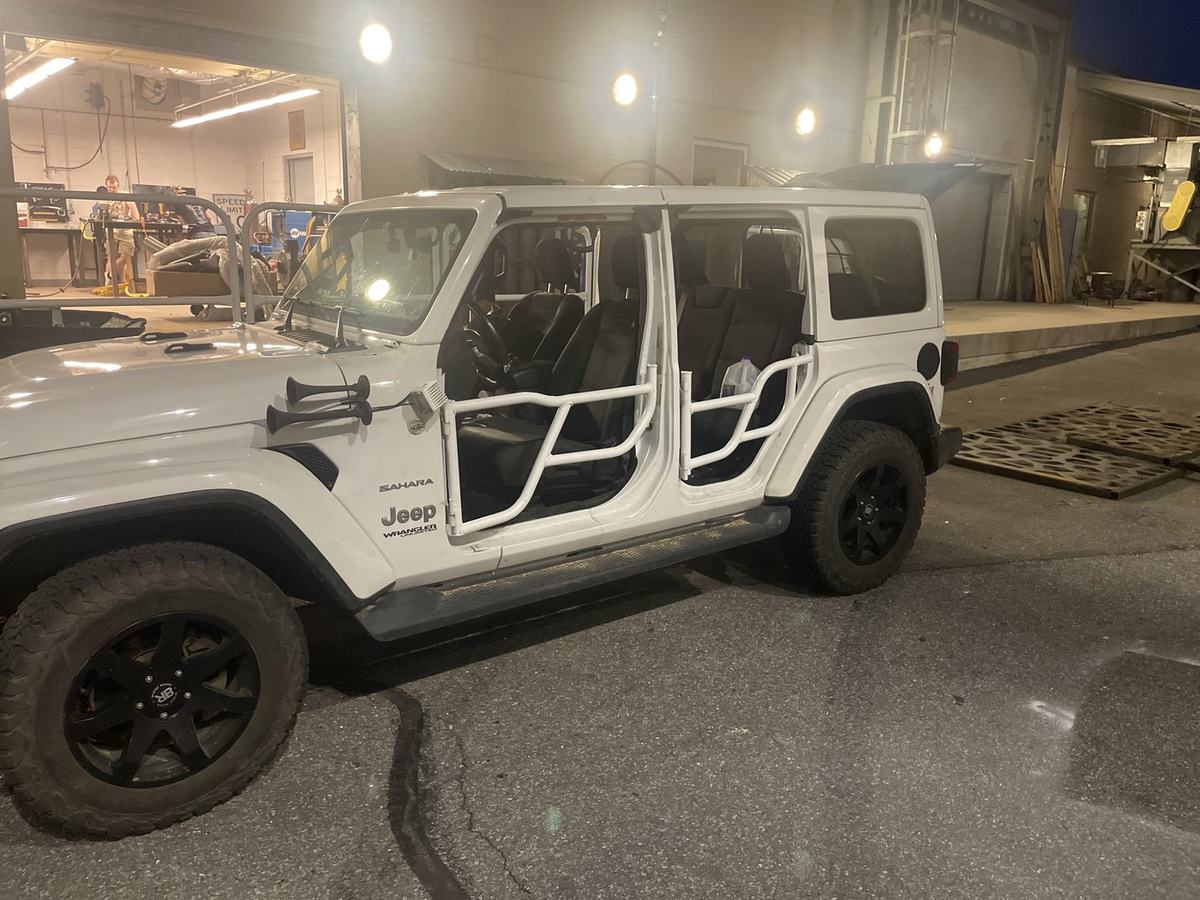
Four tubular doors for a Jeep Wrangler, replacing the factory doors for open-air and trail use. The customer's priority was explicit and it shaped everything: functional parts, fast, traded against a refined design. I had two days to deliver all four.
Cardboard CAD
Two days for four doors leaves no room for computer modeling. I had never built this type of door before, so I pulled reference images to get the general form, measured the factory doors directly off the vehicle, and went straight to cutting and bending material.
Day one was measurement, cutting, and bending — getting all four sets of shapes correct. Day two was welding and finish.
Using the car as the jig
There was no time to build fixtures, and tube assemblies without a jig come out warped and mismatched. So I used the vehicle itself as the fixture, and controlled the build with the sequence instead.
Each door was tack welded in place on the car, working from located points outward:
- Start with a solid vertical member on the hinge side, which becomes the reference every other measurement works from.
- Mount the latch side to the car using the supplied pin lock, so both ends of the door are now located by the vehicle rather than by guesswork.
- Tack the first support bar between them, then the second.
With both ends fixed to the car, the geometry could not drift, and tacking rather than fully welding kept heat input low so nothing pulled out of shape. Once all four were tacked, the doors came off the vehicle to be fully welded off the car and painted.
Cutting the right corners
This project is the clearest example I have of working fast without building something bad. The deadline meant corners had to be cut somewhere, and the useful skill was deciding which ones — what could be skipped without compromising the product, and what could not.
Modeling and jigs were skipped. Weld sequence, fitment, and finish were not. The doors mount correctly, latch correctly, and look like they belong on the vehicle. Quick and dirty is not the same as sloppy, and knowing where the line sits is most of the job when the schedule is the binding constraint.
Roll Cage — BMW Track Car
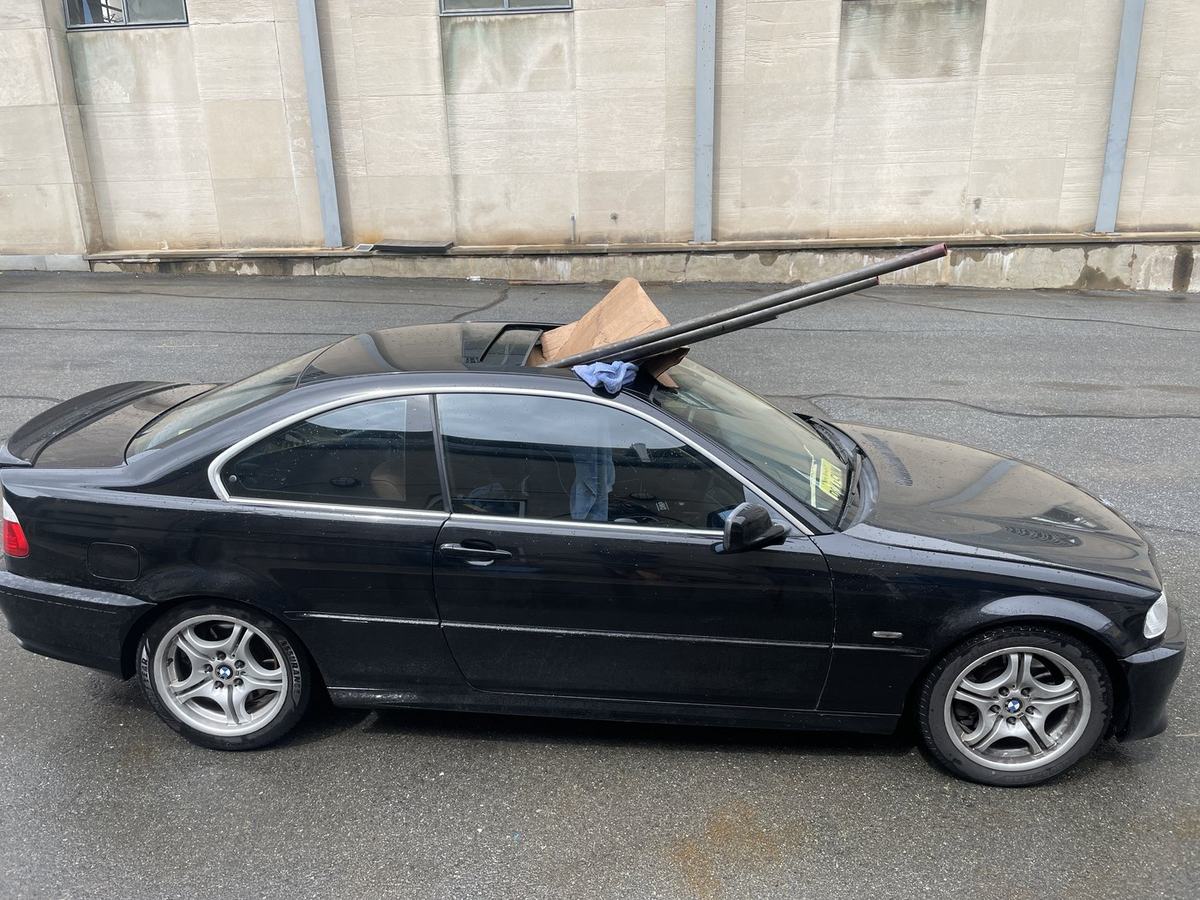
The opposite of the Jeep job in every respect. This one was planned before anything was cut, because a roll cage has to pass tech inspection and because the consequence of getting it wrong is not an inconvenience.
Regulation first
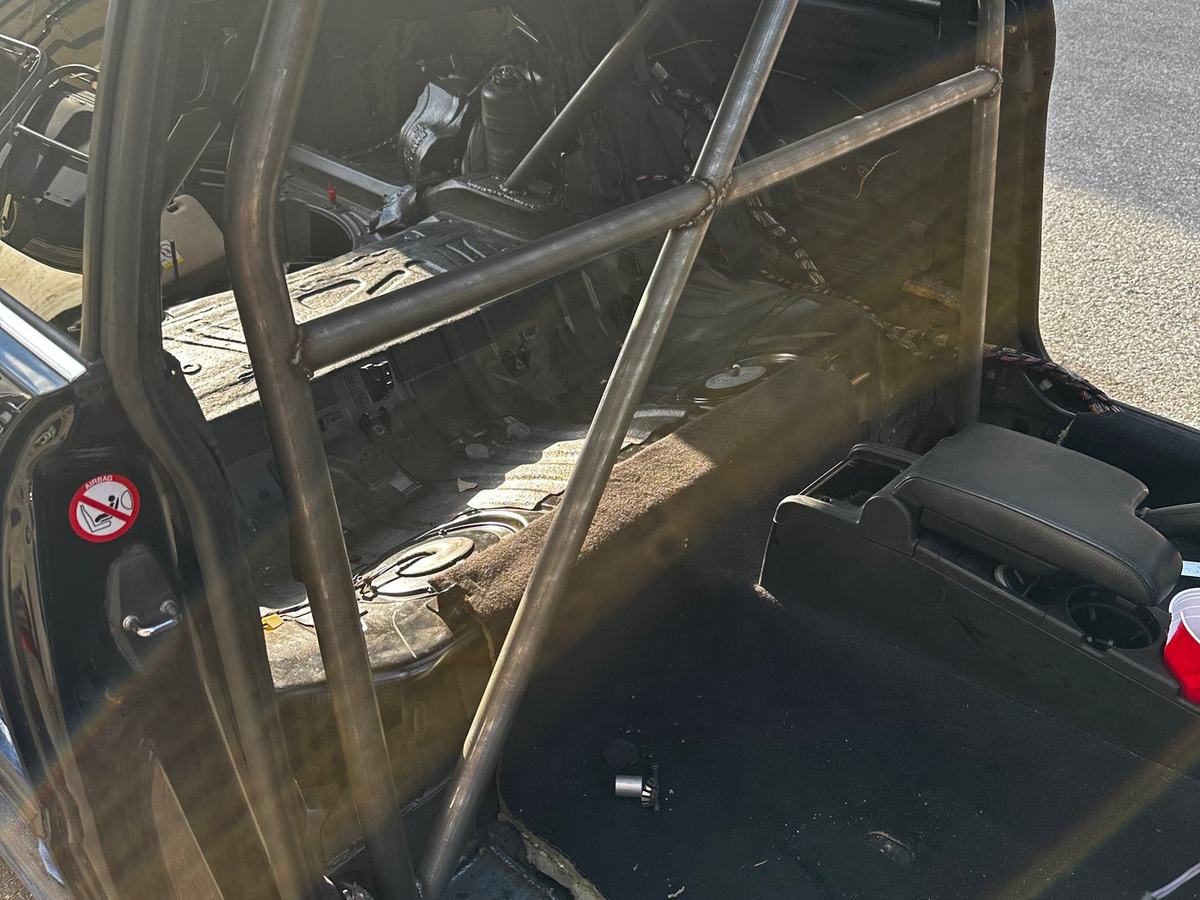
Material and design were selected from research into the safety regulations that apply to this car specifically — the requirements scale with vehicle weight, size, and engine displacement, so the rulebook determines the tube before any geometry does. The build is a four-point cage in 1.5 in DOM steel tubing, bent and welded.
This chassis has a deep body of published track documentation, so cage dimensions already existed as a starting point and the structural pickup locations on the chassis were known. That saved the guesswork, but the published numbers are a guide — they still had to be adjusted around this driver's height and seating position.
Establishing the geometry
- The main hoop was bent first and placed in the car to verify the curvature against the actual roofline and pillars.
- Base plates were cut from 1/8 in plate steel and welded to the floor, spreading load into the structure rather than concentrating it at the tube ends.
- The seat went in at the driver's chosen position, and the hoop was tack welded with the seat in place.
Fitting the driver
With the hoop tacked, the driver sat in the car and the harness cross brace was tacked in at his shoulder height. A harness bar in the wrong place is worse than no bar, and the only way to get it right is to put the person it protects in the seat and measure from them.
The rear bracing problem
The rear braces had a fixed contact point on the hoop and a fixed landing at the rear strut towers, where another 1/8 in plate was tacked. The difficulty is that the required length and angles change with every small movement of the hoop, so no measurement taken before the hoop was located would have been correct.
The solution was a string pulled from the contact point on the hoop to the landing pad. That gave the true tube length and both end conditions — the angle to cut one end and the profile to notch the other — measured off the assembled car rather than a drawing. Transferred to the tube, cut, notched, and tacked into the structure.
Finishing
With everything tacked and verified, the cage was fully welded, then seam sealed, primed, and top coated to seal the weld areas against corrosion. The customer painted the cage and interior afterward.
Outcome
The car has run numerous track days since, and the cage has passed safety inspection every time.
Designing for Installation
Having spent a summer as the technician installing other people's designs, I design with serviceability in mind — access for tools, sensible fastener choices, and assembly sequences that work on a lift rather than only on a screen.